

In the WordPress hosting industry, people often talk about performance as if it starts and ends with server specifications, caching layers, or uptime percentages. But for agencies managing multiple client websites every day, the real difference between a frustrating hosting environment and an effective one is usually felt elsewhere. It shows up in how quickly teams can launch new websites, how easily clients handle backend operations, how much time gets lost on repetitive maintenance tasks, and whether the infrastructure supports the work or rather constantly competes with it for attention.
That perspective becomes increasingly important as agencies grow. Once a business reaches a certain maturity, even small inefficiencies begin multiplying across projects, teams, and clients. Be it backend clutter, unstable performance, or inefficient management procedures, the impact sooner or later spills over into delivery speed and customer experience. And in the end, brand reputation often pays the highest price.
For Western Cloud, a digital marketing agency based in Worcester in South Africa’s Western Cape, this evolution in thinking about hosting became par for the course as the business itself kept growing. Led by the CEO Armand Wolfaardt and Director of Web Development Arend du Toit, the company works with local and international clients across a wide mix of industries, delivering everything from technical SEO and PPC management to web development, CRM solutions, workflow optimization, and content strategy. Over the years, that cross-functional expertise has also earned Western Cloud certified partnerships with Google, Meta, Shopify, and Mailchimp.

Looking Beyond Traditional Hosting Expectations
Western Cloud had already worked with other WordPress hosting solutions before. But when the business began outgrowing the current model supporting its websites, the team wasn’t set on chasing faster hosting alone or looking for a modern interface simply to please the eye. What ultimately mattered was finding an environment capable of supporting the entire lifecycle of building, managing, and maintaining WordPress websites, and one that won’t require replacement with every new stage of growth. And that is exactly what eventually led them to PanelAlpha.
As Armand explains:
Although we had worked with other hosting solutions in the past, our move to PanelAlpha was driven by its superior compatibility, speed, and ease of use.
For agencies balancing creative, technical, and strategic services at once, efficiency was never going to come from keeping those areas separate. Once the entire management flow began operating inside PanelAlpha, Western Cloud quickly started experiencing the practical impact internally.
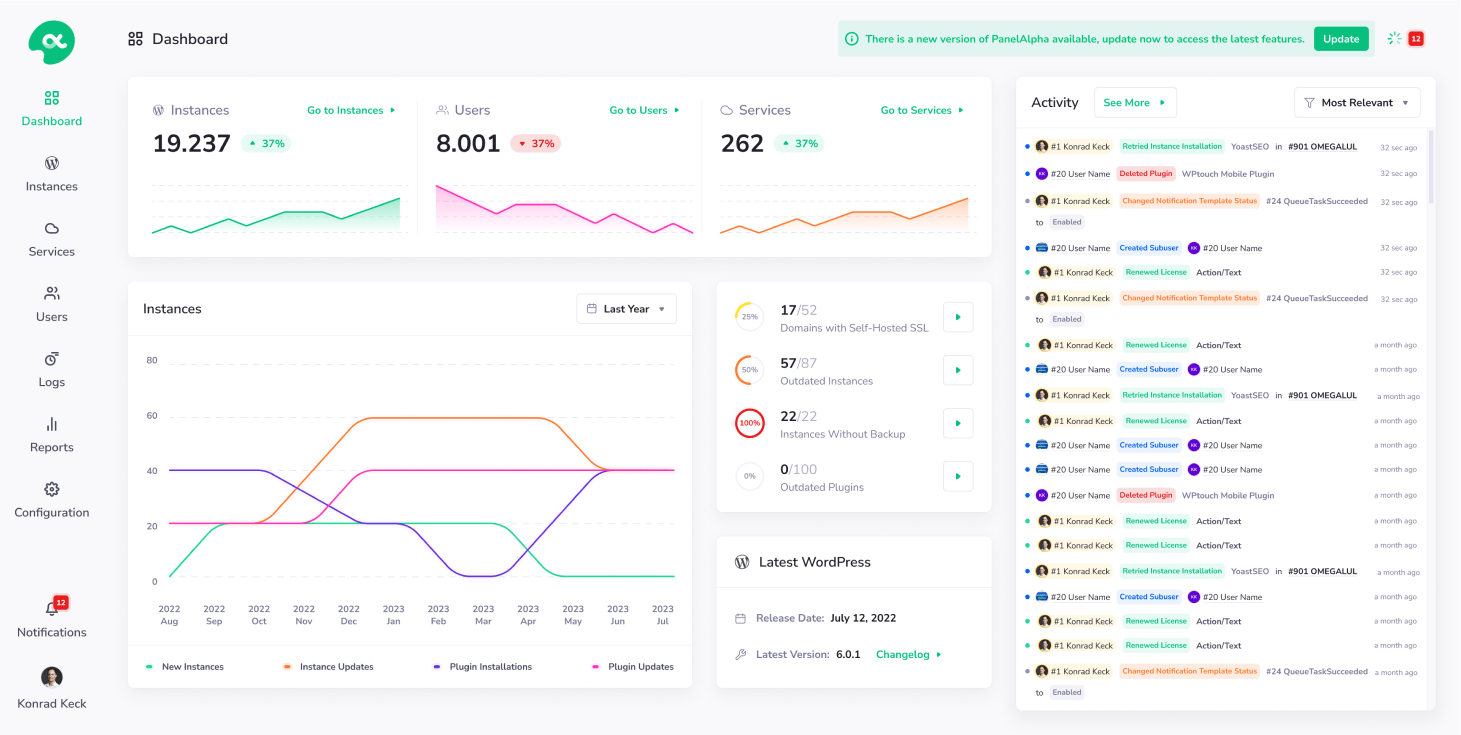
The platform’s modern interface has made it easier for our team to manage websites efficiently, while its stronger and more secure servers have delivered the additional speed boost our websites required. This combination of performance, security, and usability has made PanelAlpha a far better fit for our needs.
That overall ease of working became one of the most appreciated parts of the transition behind the scenes, and it’s not hard to see why. When backend management becomes more intuitive, agencies naturally spend less time dealing with infrastructure challenges and more time focusing on the work clients care about most. Development cycles become smoother, onboarding becomes effortless, and routine website management stops draining unnecessary energy across the team.
Armand also points to the broader ecosystem surrounding the platform as another major factor behind the decision:
PanelAlpha stood out as the right choice for us because of the strength of its ecosystem and the way it integrates seamlessly with our websites.
That concept of ecosystem compatibility has become one of the defining priorities in modern WordPress hosting. The hosting layer is no longer hidden in the background as a separate technical component, but directly affects how efficiently teams can operate across development, optimization, customer support, and long-term website management all at once.
Why Hosting Performance Impacts Far More Than Speed Tests
Performance was another major factor behind Western Cloud’s decision to move to PanelAlpha, although not in the overly simplified “faster hosting equals better hosting” sense the industry often falls back on.
For agencies operating in digital marketing, website speed influences almost everything connected to client success. It affects user behavior, search visibility, campaign performance, engagement, and ultimately the commercial outcomes clients expect from their digital presence. A slow or unstable environment never remains just a backend concern for long.
As Armand puts it:
Speed and reliability are critical when it comes to delivering a strong online experience, and PanelAlpha has performed exceptionally well in that regard.
Since the migration, Western Cloud has seen those changes extend far beyond internal workflows alone, straight into the way customers experience their websites day to day.
The feedback has been largely positive, especially when it comes to speed, reliability, and the overall smooth performance of our websites. Since making the move, we have seen our sites load faster and run more efficiently, which has helped improve the user experience significantly.
What makes this particularly important is that clients hardly ever evaluate websites through the lens of server architecture or backend tooling. They judge the experience itself, and with users becoming increasingly impatient, especially on mobile, even small delays can quickly damage engagement and trust.
Western Cloud also noticed another important improvement after the transition:
The stronger, more secure servers have also made a noticeable difference, giving our customers a more stable and dependable online experience.
For agencies managing multiple client brands at once, maintaining reliable website performance goes far beyond technical efficiency. Over time, it becomes inseparable from the credibility the business builds around its services.

The Growing Importance of Backend Experience
Another particularly strong theme throughout our conversation with Armand was backend usability, which is something the hosting industry spent years overlooking.
Historically, many hosting environments were designed primarily around server administration logic rather than the actual day-to-day experience of agencies and clients using them. But as WordPress workflows have evolved, expectations around usability have changed dramatically as well.
Modern agencies want environments they can work with intuitively. Clients expect dashboards they can navigate comfortably. Teams want workflows that reduce unnecessary steps instead of adding new ones.
Western Cloud experienced the positive change very directly after adopting PanelAlpha.
Our customers are now able to work much quicker on the backend of their websites, which has made managing their online platforms far more efficient.
That observation highlights something many providers still underestimate: good backend UX changes behavior.
When website management is easier, teams become faster and clients become more confident operating inside their own environments. Everyday tasks require less support involvement, operational slowdowns become less common, and agencies can spend more time building value instead of troubleshooting avoidable frustrations.
In many ways, this is where hosting platforms increasingly separate themselves today, not purely through infrastructure specifications, but through how naturally they fit into real operations and workflows.
Real Transitions Rarely Happen Without Adjustment
One aspect of Armand’s perspective we particularly appreciated was the honesty surrounding the migration process itself.
Too many technology success stories present transitions as perfectly seamless experiences, when in reality most infrastructure changes involve at least some level of adjustment. Different systems require new structures and habits, configurations take time, and teams need space to rethink familiar processes and adapt properly to a new working environment.
Western Cloud experienced some of those early transition challenges as well. But importantly, none of them changed the agency’s overall view of the platform or the long term value the transition created for the business.
As Armand openly admits:
The only real challenge is the initial setup phase, as it can take some time to get everything configured and running smoothly.
At the same time, he remains very clear about whether the move was worth it:
Yes, I would recommend it.
And honestly, that balance probably makes this case study more credible than any perfectly polished migration story ever could. Ultimately, what matters is not whether transition effort exists, but whether the platform leaves the business operating on a stronger, and more manageable foundation moving forward.
For Western Cloud, the answer to that question seems very clear today.
Building Better Systems Behind Better Websites
Today’s WordPress industry is no longer defined by raw hosting performance alone, just as modern agencies are no longer defined as simply building websites. They maintain entire ecosystems, managing performance, customer experience, SEO visibility, content operations, integrations, campaigns, and ongoing development simultaneously. In environments this interconnected, infrastructure becomes part of almost every experience delivered further up the chain.
Western Cloud is building very intentionally around this reality. The agency’s long-term direction is strongly focused on sustainable growth, smarter systems, automation, and continuously expanding the value delivered to clients across digital marketing, development, CRM, and workflow solutions. As the company continues strengthening its global presence and growing relationships with both local and international businesses, PanelAlpha remains closely tied to every stage of that evolution.
We would like to sincerely thank Armand Wolfaardt and the entire Western Cloud team for allowing us a closer look into their journey with PanelAlpha, not only what the platform represents for them today, but also how the relationship evolved from those first migration steps into a long-term partnership built around performance, usability, and growth. We couldn’t be more excited to continue supporting Western Cloud wherever their ambition takes them next.



Comments